

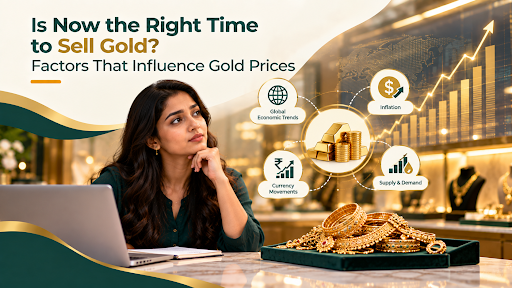
Gold is often kept as a long-term asset, but there can come a time when selling it makes practical sense. Whether you have old jewellery, unused ornaments, inherited gold, or coins, understanding what affects its value can help you decide when to sell. If you are considering cash for gold, the decision should not be based only on whether the current gold rate looks high or low. The purity and weight of your gold, the prevailing market rate, and the buyer’s valuation process also matter.
Gold prices can change over time because of several market and economic factors. Understanding these influences can help you approach the selling process with realistic expectations and compare offers more carefully.
Why Do Gold Prices Change?
Gold does not have a fixed price. Its market value can move due to changes in the global economy, demand, supply, and other financial conditions. Gold Becho notes that global gold prices can influence gold rates in India, while factors such as economic and political conditions, seasonal demand, import duties, and local taxes can also contribute to price differences.
This means that a price quoted for gold today may not necessarily be the same a few weeks or months later. If you are planning to sell, it is useful to check the prevailing market rate rather than relying on the amount you originally paid for the jewellery.
Factors That Influence the Value of Your Gold
Several factors can affect how much you may receive when selling gold. The following are particularly important:
1. Current Market Rate
The prevailing market rate is one of the key factors in gold valuation. When market prices rise, the potential value of gold generally rises as well. However, the final amount you receive depends on the actual gold content and the buyer’s valuation process.
It is therefore useful to check the current rate before arranging a valuation. This gives you a reference point when discussing the offer and helps you understand whether the quoted amount is reasonable.
2. Purity of the Gold
Gold jewellery is available in different levels of purity. For example, 22K and 24K gold contain different proportions of pure gold, which affects their value.
The karat marking can provide an indication of purity, but a proper purity check is important when selling. Jewellery can also contain other materials, such as stones, clasps, soldering materials, or decorative components. The actual gold content and net weight are therefore more relevant to resale value than the original purchase price alone.
3. Weight and Gold Content
Weight is another important part of the valuation process. However, the total weight of a jewellery item may not represent the weight of gold alone. Non-gold components may need to be considered separately during evaluation.
A professional assessment that checks both purity and weight can provide a clearer understanding of the gold’s actual value.
Does a Higher Gold Price Always Mean You Should Sell?
Not necessarily. A higher market rate can make selling more attractive, but the right time also depends on your personal circumstances.
For example, someone who needs funds for an immediate requirement may consider selling even if they are not trying to predict future gold prices. Another person with no immediate need may prefer to continue holding the gold.
The important point is to avoid making the decision based entirely on short-term price movements. Gold prices can change, and future movements cannot be known with certainty. Instead, consider the current rate, the value of your gold, your financial requirements, and the terms offered by the buyer.
If you are exploring cash for gold, understanding the valuation before accepting an offer can help you make a more informed decision.
What Should You Check Before Selling Gold?
Before proceeding with a sale, take a few practical steps:
- Check the current gold rate: Use the prevailing market rate as a reference.
- Understand the purity: Know whether your jewellery is 22K, 24K, or another purity level.
- Consider the weight: Ask how the net gold weight has been determined.
- Ask about the valuation: A reliable buyer should explain how the final amount was calculated.
- Compare offers carefully: Look beyond the headline price and understand the complete valuation.
- Choose a transparent process: You should be able to understand the purity check, weighing, and payment process before accepting the offer.
These checks can be especially useful when selling old jewellery, inherited pieces, broken ornaments, or gold coins.
Why Transparent Valuation Matters
The price offered by a buyer is important, but the process used to arrive at that price matters too. Gold Becho states that its evaluation process includes scientific purity testing and precision weighing. Its website also describes doorstep evaluation carried out in the customer’s presence.
For people who prefer not to visit multiple stores with valuable jewellery, gold valuation at home can provide an added level of convenience. Gold Becho offers doorstep valuation as part of its gold-selling process, allowing the evaluation to take place at the customer’s location.
The company also describes a process where customers can review the valuation before deciding whether to proceed. This can make it easier to understand the offer instead of deciding without knowing how the amount was calculated.
More Than Just Old Jewellery
Selling gold is not limited to jewellery that is no longer being used. People may also have gold coins or inherited pieces that they no longer need. Even damaged jewellery can retain value because the gold content remains an important part of its valuation.
Gold Becho also provides information and services related to selling gold online and gold coin buyers, giving customers options based on the type of gold they want to sell. Its website also features a Release Pledged Gold service for those exploring ways to deal with pledged gold.
A Practical Way to Decide When to Sell
There is no single market signal that can guarantee that today is the perfect time to sell gold. Instead, look at the current market rate alongside the purity and weight of your gold, your immediate financial needs, and the transparency of the valuation process.
If the purpose of selling is to access funds, waiting solely for a higher future price may not always be practical. Similarly, if you are not in a hurry, you can take time to understand the market and compare the valuation offered by different buyers.
The most useful approach is to understand what your gold is actually worth and make a decision based on your own circumstances rather than simply reacting to daily price changes.
Turning Gold Value into a Clear Decision
Selling gold becomes easier when you know what influences its value and how the buyer arrives at the final offer. Checking the market rate, understanding purity and weight, and choosing a transparent valuation process can help you approach the transaction with greater clarity.
If you are looking for a convenient and transparent option for cash for gold, Gold Becho can be the best option to opt for, with services including doorstep evaluation, scientific purity testing, precision weighing, and a process designed to help customers understand the value of their gold before completing the transaction.