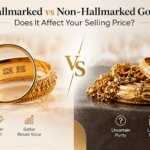

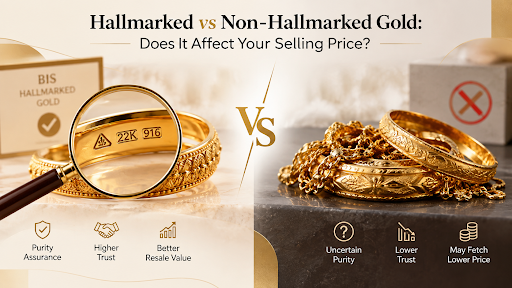
Gold jewellery is often valued for both its financial and emotional significance. However, when the time comes to sell old gold jewelry, many people wonder whether the presence or absence of a hallmark will affect the amount they receive. A hallmark can provide useful information about the purity of a gold item, but it is not the only factor that determines its final selling value.
Whether your jewellery is hallmarked or non-hallmarked, its value is generally determined through a proper assessment of its purity, weight, and the prevailing market rate of gold. Understanding how these factors work can help you approach the selling process with greater clarity and realistic expectations.
What Does a Gold Hallmark Mean?
A hallmark is an official mark that provides information about the purity of a precious metal. In gold jewellery, it helps indicate the fineness or karat of the gold used in the item.
For example, gold jewellery may be available in different purities, such as 18K or 22K. Since higher-purity gold contains a greater proportion of gold, purity plays an important role in determining its value.
A hallmark can therefore give the owner an initial indication of what their jewellery may contain. However, a hallmark alone does not necessarily determine the exact value a buyer will offer at the time of sale.
The actual value of gold can change depending on factors such as:
- The verified purity of the gold
- The net weight of the gold
- The current market price
- The presence of stones or other non-gold materials
- The buyer’s valuation process
This is why understanding the difference between hallmarked and non-hallmarked gold is important before making a selling decision.
Does Hallmarked Gold Receive a Higher Selling Price?
A hallmark itself does not automatically guarantee a higher price for a gold item. What matters most is the actual purity of the gold.
A hallmarked piece may make it easier to identify its stated purity. However, a responsible buyer may still conduct a purity assessment before determining the final value. This helps ensure that the valuation is based on the actual gold content rather than only on markings present on the jewellery.
For instance, two pieces of jewellery may have a similar appearance and weight, but their gold content can differ. The item with a higher verified purity may have a higher gold value.
Therefore, when selling gold, it is important to focus on the complete valuation rather than assuming that a hallmark alone will decide the final price.
What Happens When You Sell Non-Hallmarked Gold?
Non-hallmarked gold can also be sold. The absence of a hallmark does not necessarily mean that the jewellery has no value or that it contains low-purity gold.
Older jewellery, inherited ornaments and jewellery purchased many years ago may not always carry a hallmark. In such cases, the purity of the item needs to be determined through an appropriate testing process.
A transparent evaluation can help identify:
- The actual purity of the gold
- The precise weight of the item
- Any non-gold components included in the jewellery
- The applicable market rate
- The basis on which the final offer is calculated
This means a non-hallmarked item can still receive a fair valuation based on its actual gold content.
Why Purity Matters More Than the Hallmark Alone
The purity of gold is one of the most important factors in its valuation. Jewellery can contain different proportions of pure gold and other metals, depending on its karat.
For example, 22K gold generally contains a higher proportion of gold than 18K gold. Therefore, two jewellery items of the same weight may not necessarily have the same value if their purity levels differ.
When you decide to sell old gold jewelry, the valuation should ideally be based on a proper purity check rather than assumptions about the jewellery’s appearance, age, or original purchase price.
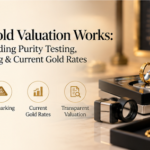
Scientific testing methods can provide a clearer understanding of the gold content. Gold Becho states that its evaluation process uses purity testing along with precision weighing scales to assess the value of gold. The company also explains that the valuation process is carried out transparently in the customer’s presence.
How Weight Influences Your Gold’s Selling Value
Weight is another essential factor in determining how much your gold may be worth. However, the total weight of a jewellery item may not always represent the exact weight of the gold alone.
Some jewellery pieces may include:
- Precious or semi-precious stones
- Beads or decorative elements
- Clasps and other components
- Non-gold materials
A proper evaluation should account for these elements while determining the net gold weight. This is particularly important for heavily designed or stone-studded jewellery.
The final valuation is generally based on the combination of verified purity and the relevant gold weight, using the applicable market rate at the time of the transaction.
The Role of Current Gold Market Rates
Gold prices change regularly due to market conditions. As a result, the amount offered for the same piece of jewellery may vary depending on when it is evaluated and sold.
A transparent buyer should clearly explain the market rate used during the valuation. It is also helpful to understand how the buyer calculates the final amount rather than focusing only on a headline price.
Before proceeding, you can ask:
- What is the verified purity of my jewellery?
- What is the net weight considered for valuation?
- Which market rate is being used?
- How has the final offer been calculated?
- Are any deductions or charges applicable?
Asking these questions can help you compare offers more effectively and understand the complete transaction.
Why the Valuation Process Matters
When comparing gold buyers in Mumbai, the quality and transparency of the valuation process can be just as important as the quoted price.
A reliable gold buyer should explain how the purity is tested and how the jewellery is weighed. The customer should also understand the market rate being considered and the basis for the final offer.
Gold Becho provides information about doorstep gold evaluation and describes a process involving scientific purity testing, precision weighing and payment after the valuation process. Its website also advises customers about the importance of understanding purity, weight and market rates when determining the value of old gold jewellery.
Useful Resources to Review Before Selling Gold
Before selling your jewellery, it can be useful to learn more about the process and the factors affecting its value. Gold Becho provides several resources that can help sellers understand different aspects of a gold transaction, including:
- How to Sell Gold – for understanding the basic process of gold evaluation and selling
- Gold Coin Buyers – for information about selling gold coins
- Gold jewellery buyers – for learning what questions to ask before accepting an offer
- sell gold online – for exploring a convenient approach to the selling process
Reviewing the valuation process in advance can help you make a more informed decision, particularly if you are selling valuable, inherited or old jewellery for the first time.
Making an Informed Gold Selling Decision
Hallmarked gold can provide useful information about the stated purity of your jewellery, while non-hallmarked gold requires a proper assessment to determine its actual purity. However, in both cases, the selling price should ultimately depend on the verified gold content, accurate weight, and prevailing market conditions rather than the presence of a hallmark alone.
If you are planning to sell old gold jewelry, choosing a transparent and reliable buyer is essential. Among the available gold buyers in Mumbai, Gold Becho can be considered one of the best options, offering information on purity-based evaluation, transparent valuation methods, doorstep service, and a process designed to help customers understand the value of their gold before completing a transaction.